
Sustainable Poultry
Backyard hens, easier than most people assume.
Chickens are, in many ways, the easiest and most sustainable "livestock" a beginner can keep, and they give back more than almost any other addition to a small urban or suburban garden.
If this topic is close to your heart, I invite you to subscribe to the newsletter or follow the seasonal news and activities on my blog or on Instagram, and become part of the Urban Roots community.
1 · Why start with poultry
Reasons to actually do this.
Fresh eggs, daily
Two to four hens can produce enough eggs for a family, often within the first months, with a real difference in taste from supermarket eggs.
Free pest and weed control
Let hens into a fenced-off bed after harvest and they'll work through slugs, snails, and many damaging insects, while scratching up weeds.
A low daily time cost once set up
Letting them out, checking food and water, and collecting eggs takes most keepers just a few minutes a day.
Great fun for kids
Feeding the flock and collecting eggs each morning is something small children take to immediately, for many families it becomes the favourite part of the day.
A calming, grounding hobby
Many first-time keepers are surprised how enjoyable it is simply to watch hens go about their day.
Before you start: a real commitment
Hens aren't a short-term project, they typically live 5 to 10 years, and they'll need a safe home, fresh food and water, and your attention for all of that time, not just the first exciting weeks. Before bringing any home, it's worth thinking it through properly, who looks after them when you're away, how your plans might change over the next several years, and whether you're ready for a genuine multi-year commitment to a living animal, not just a fun season.
2 · Common misconceptions
What holds people back, and why it shouldn't.
When my daughter first asked for a pet, what she really wanted was a cat or a dog. What we actually had was a family that travels often, and a cat or dog that needs daily feeding, company, and care isn't something you can simply pause for a week or two away. So we started looking for an alternative, half-expecting to be told to wait a few years. What we found, once we looked into it properly, surprised us.
Chickens have a reputation for being demanding, noisy, and legally off-limits in a residential garden. Here's why that reputation doesn't hold up.
“Chickens are a lot of maintenance, probably more than a cat.”
Backwards, it turns out. A hen house with a large-capacity feeder and waterer doesn't need daily hands-on care; ours goes comfortably a couple of weeks between top-ups.
“They're very noisy.”
Mostly a myth about the wrong bird. Hens are quiet, soft clucking and a brief "egg song." The noise people picture is a rooster, and you don't need one at all for eggs. If noise is still a worry, some breeds are known for being especially calm and quiet, Sussex, on the starter list below, is a good pick.
“You're not allowed to keep them in a city or residential garden.”
Also mostly a myth. Keeping a small flock in a private garden is generally permitted across Germany, subject to registration. The real restriction is on Kleingarten (allotment) bylaws, not private gardens generally.
“I need to know how to care for animals already.”
Most first-time keepers don't. Hens forage, dust-bathe, and put themselves to bed at dusk, you're mostly there to check in, not to intervene.
After we did the research, chickens turned out to be the lowest-maintenance pet we could realistically give our daughter, genuinely less demanding than a cat or dog would have been for a family often away from home, and she gets to collect eggs most mornings, which turned out to be the part she loves most. We're not saying there's nothing to learn, you'll still want to know the basics in this guide, especially around predator-proofing and winter care, but "a lot of maintenance" and "not allowed here" were never accurate for us, and they're probably not accurate for you either.
3 · Getting started basics
What actually matters.
Space
Aim for at least 1 m² of coop space per hen, and around 4–10 m² of outdoor run per hen if the run is fixed, hens that free-range part of the day need less. A modest garden of 50–100 m² can comfortably support a small flock.
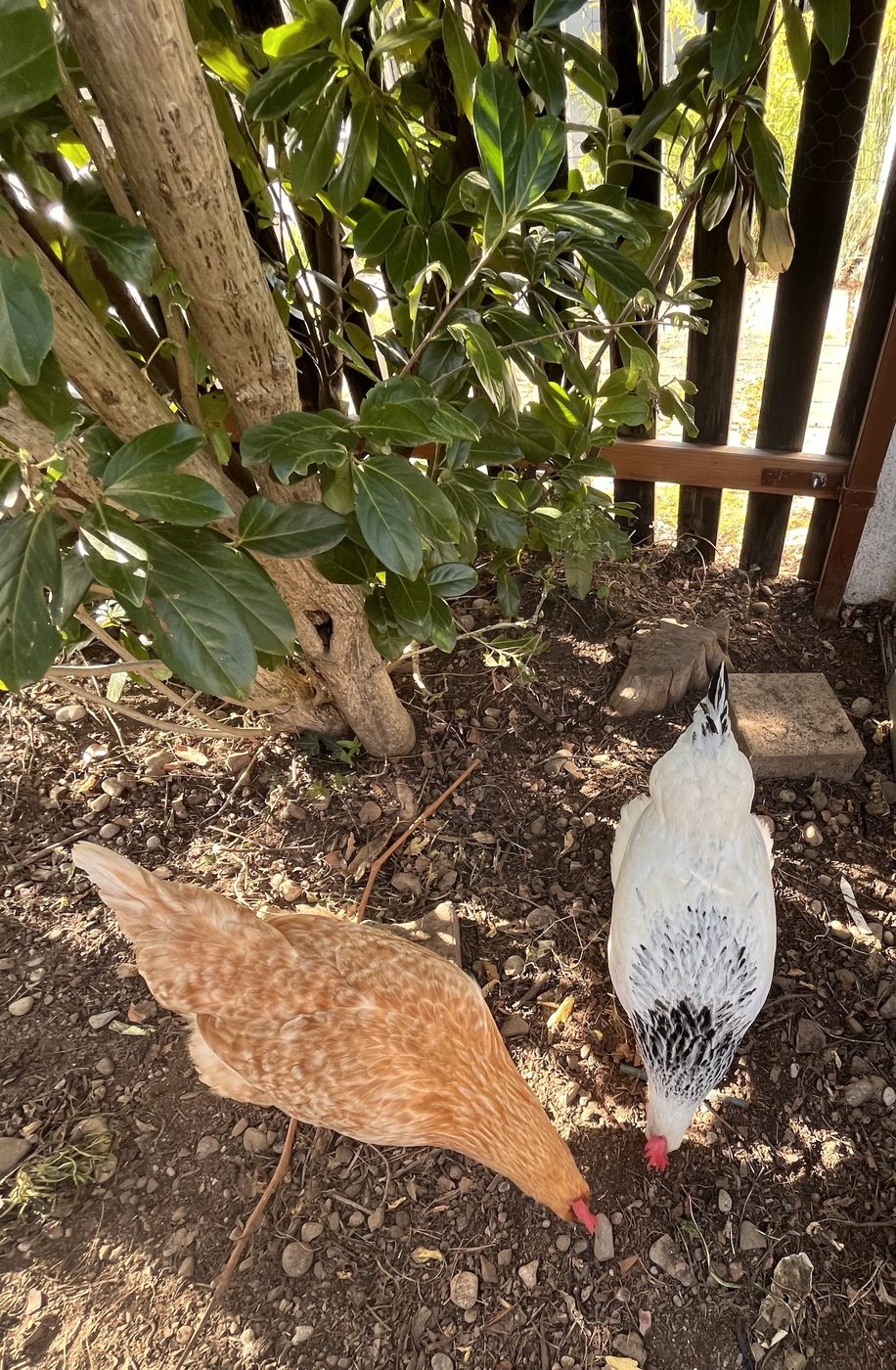
Hens also appreciate some shade, dappled light under a tree or shrub keeps them cool in summer and gives real cover from circling birds of prey. A good trick for most gardens: run the wire fence a few metres in from the boundary, along the shaded strip where a hedge (Hecke) usually sits. Very little grows well there anyway, so it isn't space you're giving up, and hens love using it to forage in the leaf litter and take a dust bath.
Coop and run basics
A small mobile or prefab coop-and-run combination is easy to move and, in most places, doesn't require a building permit.
- A weatherproof, draught-free sleeping area with a perch (~20–30 cm per hen)
- Nest boxes, one per 3–4 hens, roughly 35 × 35 cm
- Good ventilation up high (chickens tolerate cold far better than damp air)
- A run fully enclosed on all sides and overhead, with hens shut safely inside the coop every night by dusk, foxes and martens are mainly nocturnal, so the coop (not the run fencing) is what keeps them out overnight
- Easy access for cleaning and egg collection
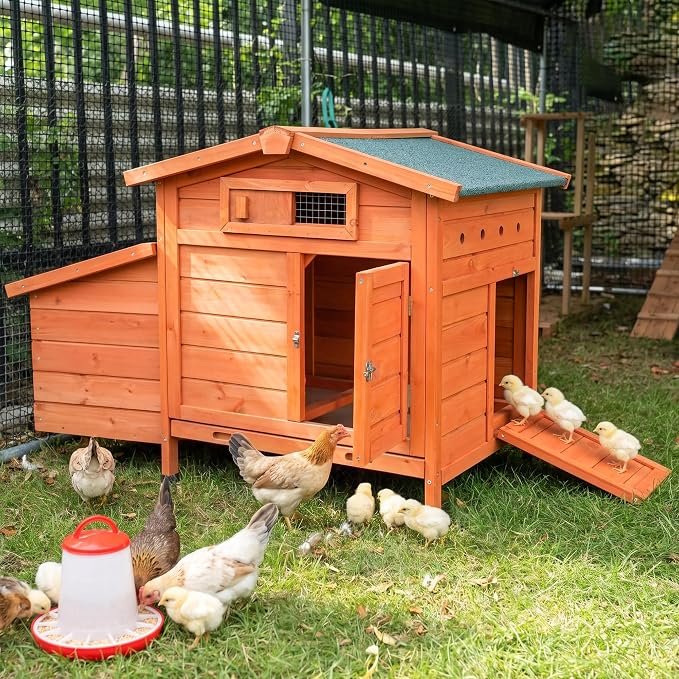
Compact coop, 2–3 hens
A small, insulated, winterproof wooden coop with 2 nesting boxes, sized for a starter flock of two to three hens, the easiest first setup.
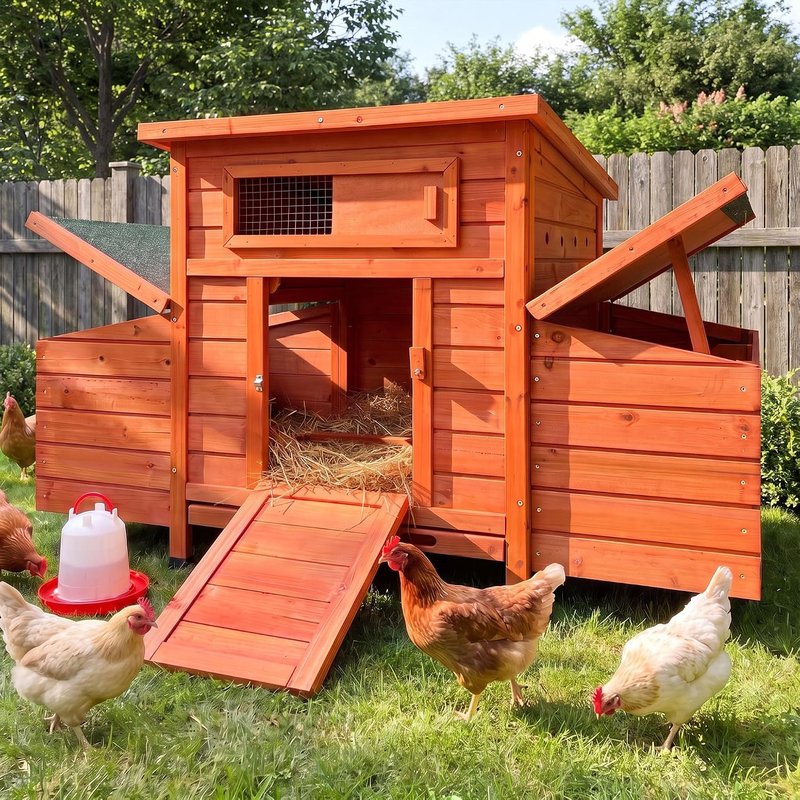
Larger coop, 4–5 hens
A bigger insulated, winterproof wooden coop with 4 nesting boxes, for a flock of four to five hens, the next step up once you're ready to grow the flock.
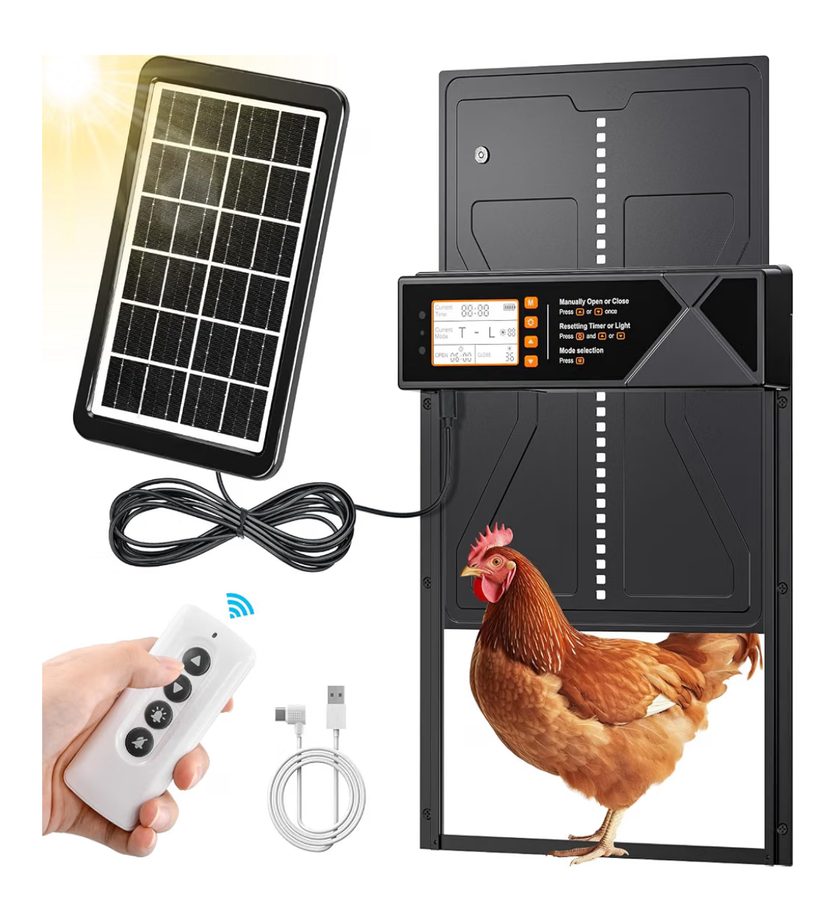
Automatic coop door
Don't want to open and close the coop door by hand every morning and evening? An automatic door, on a timer or a light sensor, does it for you: closing at dusk to keep foxes and martens out overnight, and opening again at sunrise. It's still worth checking in on it every so often, glance in before dark now and then to make sure every hen actually made it inside before the door shuts, and recheck the timer as the seasons change so it's still closing around actual dusk, not before.
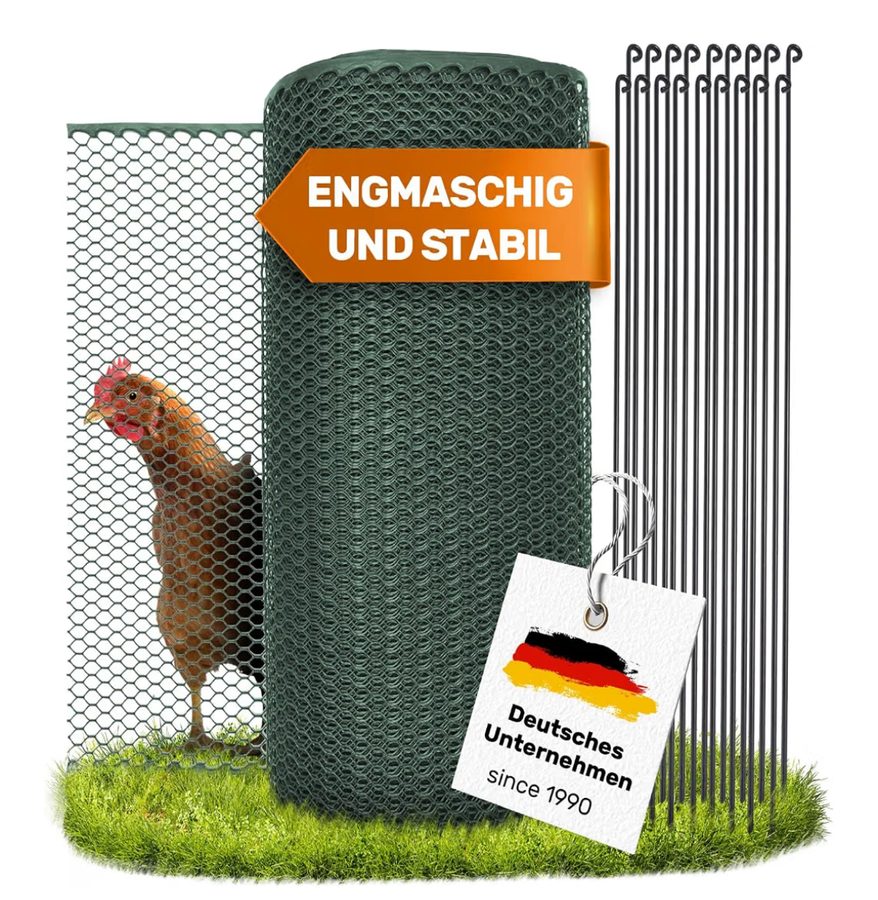
Run fencing
Lightweight netting or mesh fencing that's easy to put up and move around the run. As a rule of thumb, a fence around 1.2–1.5 m high contains most calm, beginner-friendly breeds, lighter, more active breeds can clear a low fence easily, so go toward the taller end (or clip one wing) for those. The 120 cm roll linked below sits right at the lower end of that range, so it's a good fit for calmer breeds, and comes with ground stakes (Erdanker) to pin the base in place, no digging required. This is about keeping hens in during the day, not predators out, foxes and martens are mainly a nighttime risk, and that's handled by shutting hens into a secure coop by dusk, not by the run fence.
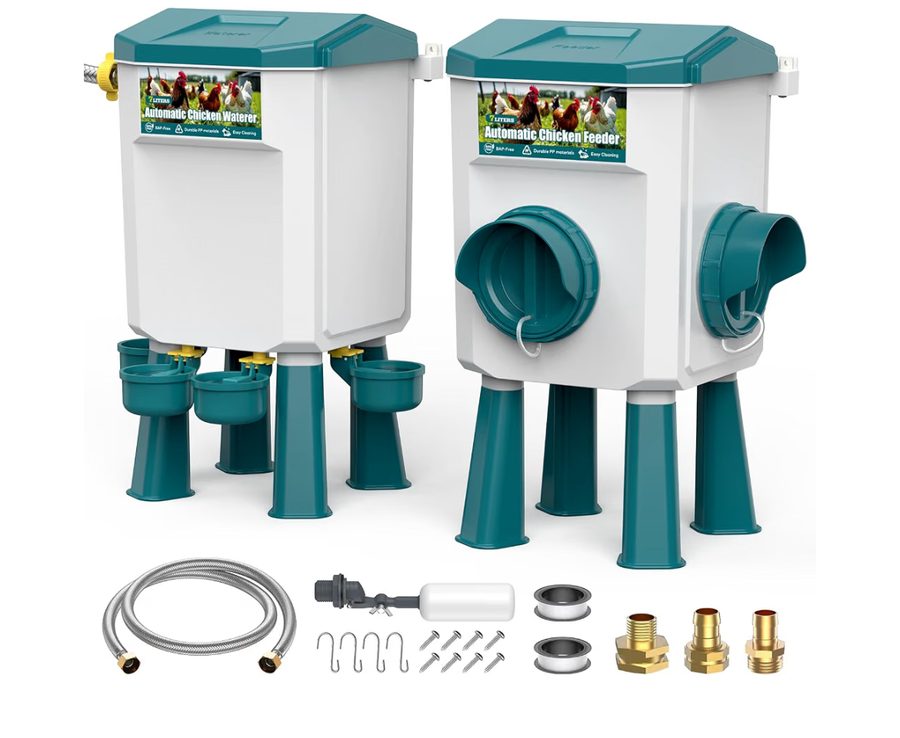
Feeder and waterer
A gravity-fed feeder and a waterer (or nipple-drinker system) hens can't tip over, perch on, or foul, holding a few days' supply so you're not refilling every day. Raising both slightly off the ground helps keep bedding and water cleaner for longer.
How many hens to start with
Chickens are flock animals and don't do well entirely alone, so a single hen isn't a good idea, but the flock doesn't need to be large to be happy. Two hens can get along very well and give a household a steady supply of eggs; three to four gives a bit more buffer without being more than most first-timers want to manage while learning.
What age to start with: chicks or point-of-lay hens?
There are two ways to start a flock, and beginners often assume day-old chicks are the only option:
For beginners, point-of-lay hens are the easier and more reliable starting point, no brooding equipment, far less risk in the first few weeks, and eggs much sooner.
- Day-old chicks
- The more hands-on route. They need a heat lamp or brooder for the first 4–6 weeks, extra care while they feather up, and won't start laying until roughly 18–22 weeks old, about four to five months away.
- Point-of-lay hens (Junghennen)
- Young hens already raised past the vulnerable chick stage, typically 16–20 weeks old. No brooder or heat lamp needed, and they usually start laying within 4–6 weeks of coming home.
Raising chicks from day one is a rewarding option if you want that experience, just budget the extra weeks of care and equipment before your first egg.
Where to buy your hens
A good breeder or hatchery makes it far easier to start with healthy, well-socialised hens, ideally already vaccinated against Marek's disease (see "Common health issues" below). In Germany, buying hens is almost always a local, pickup affair rather than an online purchase, live birds generally can't go by standard post/DHL, and most breeders sell only for collection. One exception offering nationwide delivery is included below.
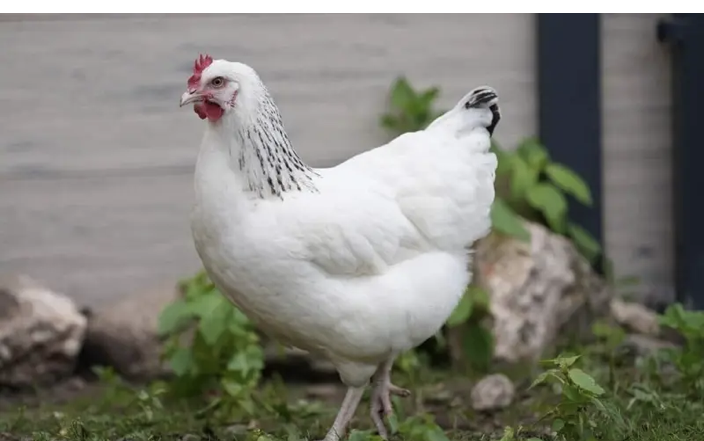
Landleben.bio
Moisburg, Lower Saxony. Over 25 breeds (Sussex, Marans, Araucana, Leghorn, Silkies, and dwarf varieties among them) sold at point-of-lay, 15–24 weeks old, roughly €45–60 per bird. Farm pickup, or nationwide delivery via a licensed livestock-transport courier.
Do you need a rooster?
No. Hens lay eggs perfectly well without a rooster, one is only needed for fertilised eggs to hatch chicks. Most urban and suburban keepers keep hens only, which is also the simplest choice for noise and neighbour relations.
Feeding basics
A commercial "layer feed" (Legemehl/Legekorn) covers most nutritional needs. Hens also enjoy garden greens, e.g. Löwenzahn (dandelion), Brennnessel (nettle, chopped or wilted), Klee (clover), and Gänseblümchen (daisies), plus vegetable scraps, grit, and a calcium supplement (crushed oyster shell or crushed, dried egg shell) for strong eggshells, and constant clean water. Avoid avocado, raw beans, chocolate, and salted or mouldy food.
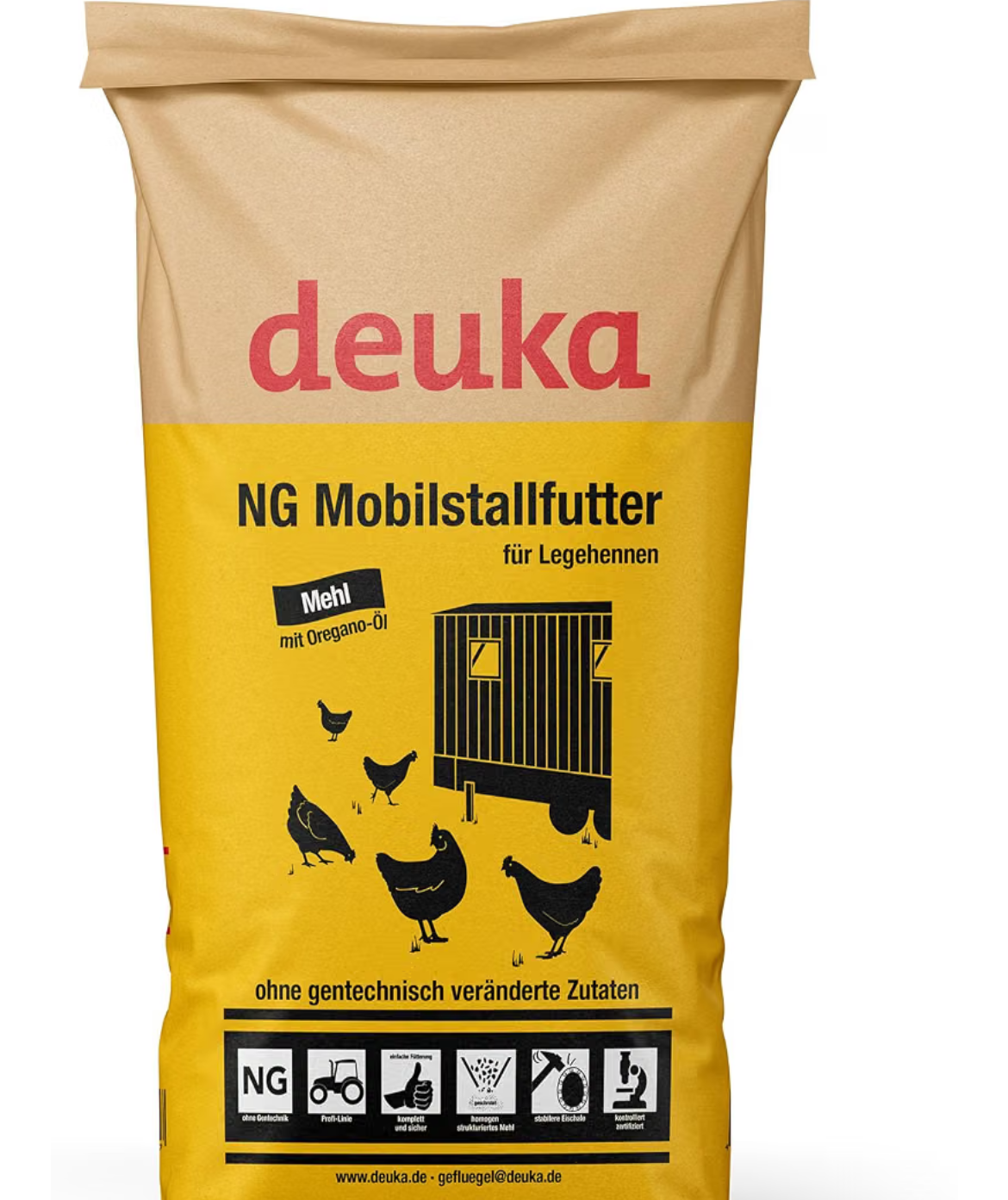
Non-GMO complete feed
deuka NG Mobilstallfutter, a complete feed (Alleinfutter) for laying hens, so no other feed is needed. Non-GMO ("NG", ohne Gentechnik), controlled antibiotic-free, with oregano oil.

Bio layer feed
Agrarzone Bio Geflügel Körner-Mix, a certified organic (Bio) grain mix of organic soybean meal, corn, and wheat, with natural calcium added for strong eggshells.

Grit
Wolff & Müller Magenkiesel, insoluble grit (1–2mm grain) for poultry and chicks, so hens can grind their food properly. Essential if they don't free-range on naturally gritty ground.
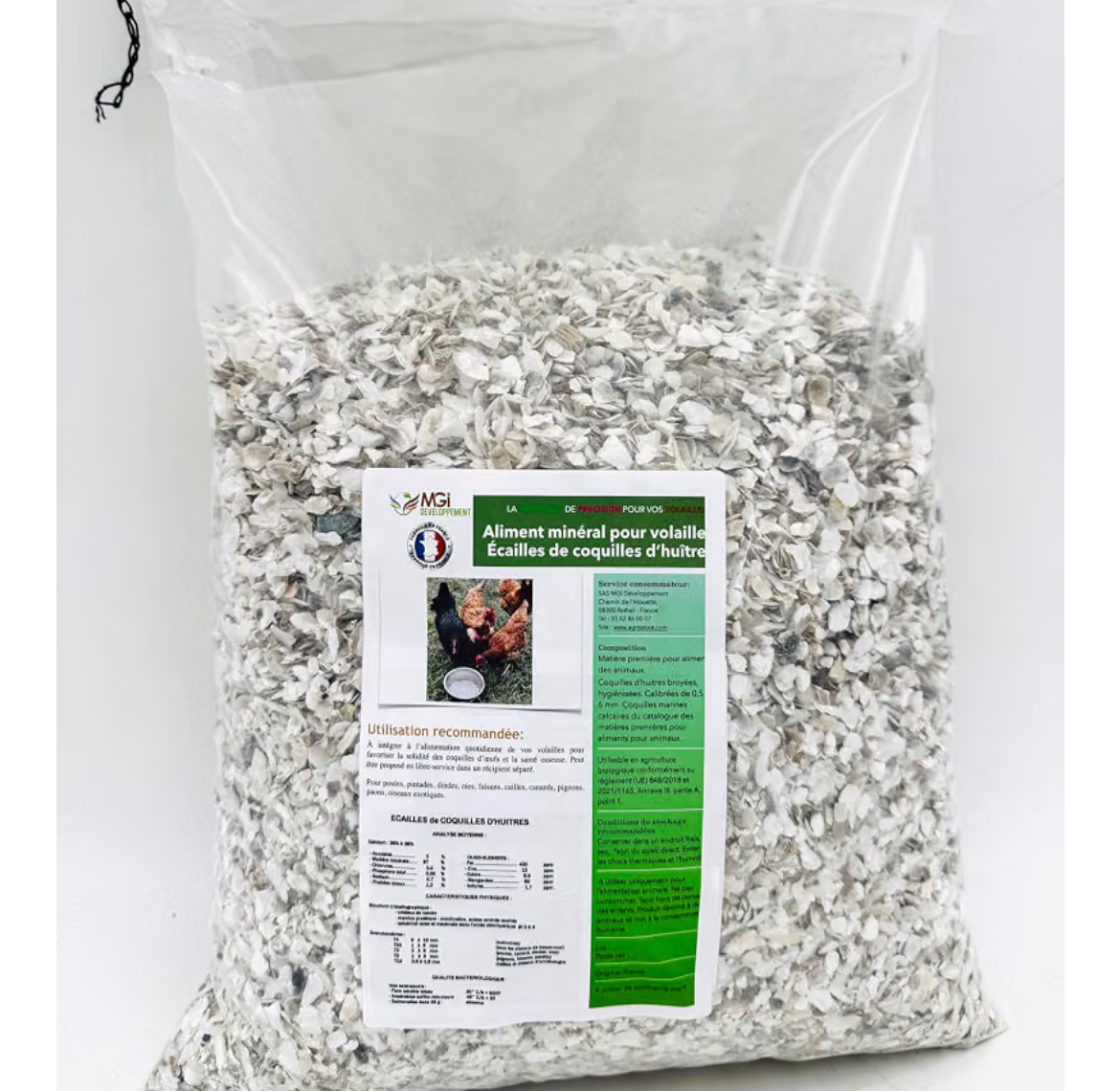
Oyster shell
Crushed oyster shell, a natural calcium supplement offered free-choice alongside feed for strong eggshells.
Registration, the essentials
A legal requirement from your very first hen, no minimum flock size is exempt, in any German state:
- Your local Veterinäramt, a nationwide requirement under the Viehverkehrsverordnung.
- Your state's animal disease fund (a Tierseuchenkasse or equivalent), most states prompt an annual report as of 1 January, due mid-to-late January.
Use the BDRG's state-by-state directory (https://www.bdrg.de/fuer-sie/tierseuchenkassen-der-bundeslaender) to find your state's contact. You'll also want a simple flock register (kept 3 years) and, if you ever medicate, a treatment record (kept 5 years).
Common health issues & care


- Coccidiosis
- Mainly affects young/stressed birds; a dry, uncrowded coop is the best prevention. If it does take hold (watery or bloody droppings, a hunched, listless bird), contact a vet promptly, they can confirm it and prescribe the right anticoccidial treatment.
- Marek's disease
- A viral disease with no treatment once a bird has it, but the day-old vaccine (given at the hatchery) is highly effective at preventing it, even if not an absolute 100% guarantee. Because of that, the best safeguard isn't treating it later, it's only ever buying chicks or point-of-lay hens that the breeder or hatchery confirms were already vaccinated.

Red mite
Check perches with a torch after dark, they hide in cracks by day and feed on hens at night. If found, treat the whole coop promptly: strip it out, treat every crack, crevice, and perch, and repeat after 7–10 days to catch newly hatched mites, since a single treatment rarely finishes the job. Organic control: AniForte Kieselgur (diatomaceous earth), a natural product, not a chemical pesticide: the fine powder scratches through the mites' waxy coating so they dehydrate. Dust it generously into cracks, perches, and nest boxes, avoiding direct inhalation, and repeat after about a week. Also works mixed into the dust-bath area.
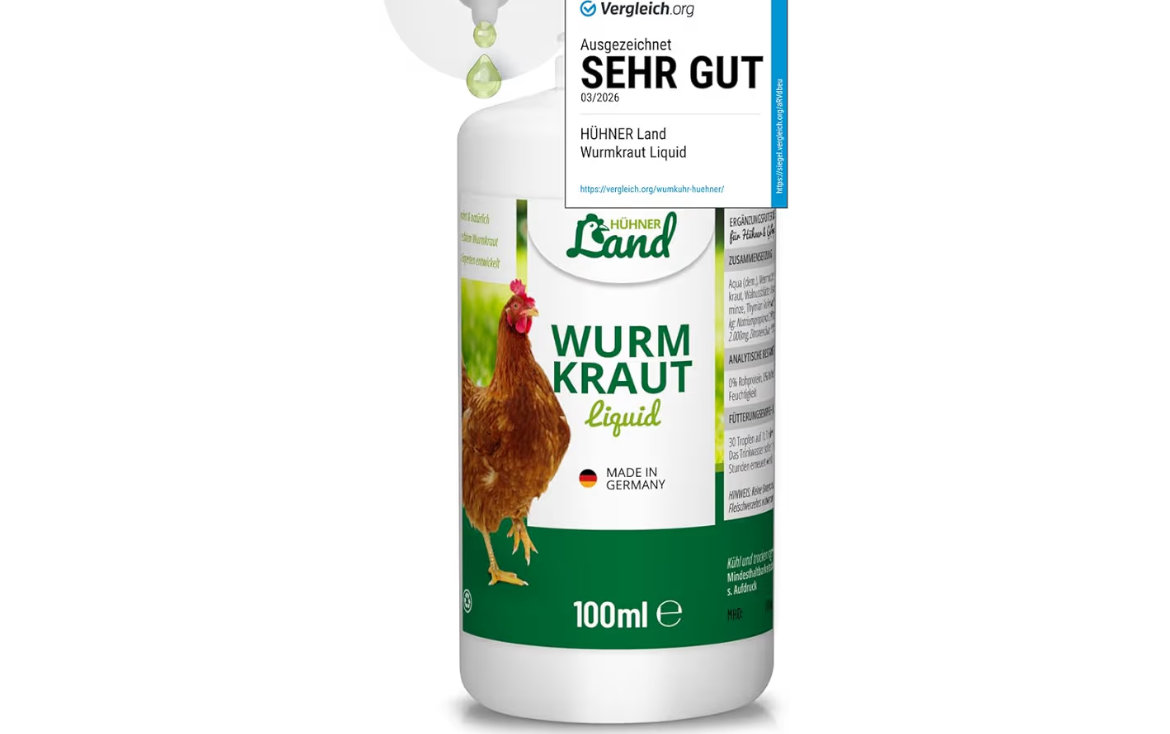
Worms
Prevention does most of the work: keep the coop and run dry, uncrowded, and clear of droppings build-up, and rotate where the run sits if you can, since damp, crowded ground is what lets worm eggs accumulate. A faecal check once or twice a year confirms whether you actually have a problem. Try this first: Hühner Land Wurmkraut Liquid, a wormwood-based herbal liquid added to the water. A traditional plant-based support, not a proven medical dewormer, so if a confirmed infestation doesn't clear up, the next step is a vet visit for a proper prescription wormer (flubendazole or fenbendazole), dosed correctly for your flock, with the right waiting period (your vet will tell you) before the eggs are safe to eat again.
A clean coop, dry bedding, good ventilation, and regular observation prevent the large majority of issues a beginner will ever see.
4 · Beginner-friendly starter list
Easy breeds for German gardens.
"Winterhart" (winter-hardy) means the breed tolerates cold well with a draught-free coop, no breed can handle a genuinely unheated, exposed shelter through a German winter.
Buy from Landleben.bio — The breed rows below link to the matching breed page on landleben.bio, point-of-lay hens, 15–24 weeks old, farm pickup or nationwide delivery.
Sussex
Vorwerkhuhn
Araucana
Wyandotte
Hybrid layers (e.g. Lohmann/ISA Brown)
A mixed starter flock drawn from this list, for example, a hybrid or two for reliable eggs plus a calmer heritage breed, is a common, low-risk way to begin. A flock of just two, as long as they're never entirely alone, does perfectly well.
5 · Calendar
What a beginner year looks like.
German winters vary by region, colder and snowier in the east, south, and higher elevations, milder in the west and along the coast, but the same seasonal rhythm applies everywhere.
| Season | What to expect |
|---|---|
| Spring (Mar–May) | Egg-laying rises after the winter dip. Deep-clean the coop, refresh bedding, check fencing. Easiest season to bring home young or point-of-lay hens. Foxes/martens more active. |
| Summer (Jun–Aug) | Peak laying, near-daily eggs from productive breeds. Provide shade and always-full water; watch for red mite in the heat. |
| Autumn (Sep–Nov) | Most hens moult, and laying pauses or slows, completely normal. Prepare the coop for winter: draughts, dry bedding, watertight roof. |
| Winter (Dec–Feb) | Egg production drops (driven by daylight, not health). Keep the coop dry and draught-free, not heated. Check water daily, it can freeze. |
6 · Common beginner mistakes
Easy to make, easy to fix.
Building the coop too small.
Cramped hens fight, stress, and lay fewer eggs.
→ Plan for at least 1 m² of coop space per hen from day one.
Skipping predator-proofing.
Foxes and martens are common even in suburban areas and are mainly active at night; a coop that isn't secure, or hens left out past dusk, is what risks a flock.
→ Fully enclose the run with overhead netting for daytime safety, and make sure hens are shut inside a secure, draught-free coop every night before dark.
Choosing the wrong breed for the climate.
Some flashy or light-bodied breeds struggle badly with cold, damp winters.
→ Stick to cold-hardy breeds, especially ones with a small, flat ‘rose’ comb that sits close to the head.
Skipping registration.
Many beginners assume registration only applies to farms.
→ Register with your Veterinäramt and state animal disease fund from your very first hen.
Poor ventilation in the coop.
A tightly sealed coop traps moisture and ammonia, which harms lungs more than cold air does.
→ Build in ventilation gaps high up that stay open year-round.
Blaming flock size for fighting.
Squabbling and feather-pecking are usually blamed on "needing more hens," but the real trigger is almost always overcrowding or too few feeding points.
→ Keep to the space guidelines, and add a second feeder/waterer if your flock is at capacity.
Getting a rooster "just in case."
New keepers sometimes add one without realising the noise and legal implications.
→ Start with hens only, you don't need a rooster for eggs.
7 · Legal & practical considerations
What to check before you start.
Nothing here is legal advice, always double-check specifics against your own municipality, since local rules on coop placement and building can differ street by street.
Registration, from your very first chicken
No minimum flock size is exempt. Register with your local Veterinäramt (nationwide requirement) and your state's Tierseuchenkasse-equivalent fund, use the BDRG's state directory to find yours. Registration applies "ab dem ersten Tier", from the first bird, in every German state.
Building / zoning rules for the coop
Small, mobile coops generally don't need a building permit in most German states, but fixed/permanent structures, or coops above a certain size, may, and there are usually minimum distances to the neighbouring property line set by your local Bebauungsplan. Confirm with your local Bauamt before building anything permanent.
Roosters and noise
Hens are quiet enough that noise is rarely an issue. Several German courts have found a rooster's crowing is not automatically an actionable noise nuisance, though outcomes vary by case. In dense residential settings, the safest choice is still hens only.
Kleingarten (allotment) plots
The Bundeskleingartengesetz restricts allotments to "kleingärtnerische Nutzung", growing plants, and most association bylaws explicitly exclude poultry. If you only have access to a Kleingarten, assume chickens aren't allowed and check your association's current bylaws directly. This is the real source of the "not allowed" idea, not a general ban in cities or private gardens.
Neighbour relations
Even where legally permitted, German neighbour law includes a general duty of consideration (Rücksichtnahmepflicht). Mention your plans to close neighbours, be thoughtful about coop placement and cleanliness (smell is a more common complaint than noise), and consider sharing eggs.
These are general pointers, not legal advice, state law, association bylaws, and local ordinances vary, so confirm specifics for your own location.
8 · Starter Q&A
Quick answers to first questions.
Get the occasional update
New guides, seasonal reminders, and upcoming Munich events, no spam, unsubscribe any time.